ESCAPE TO TRIZONIA
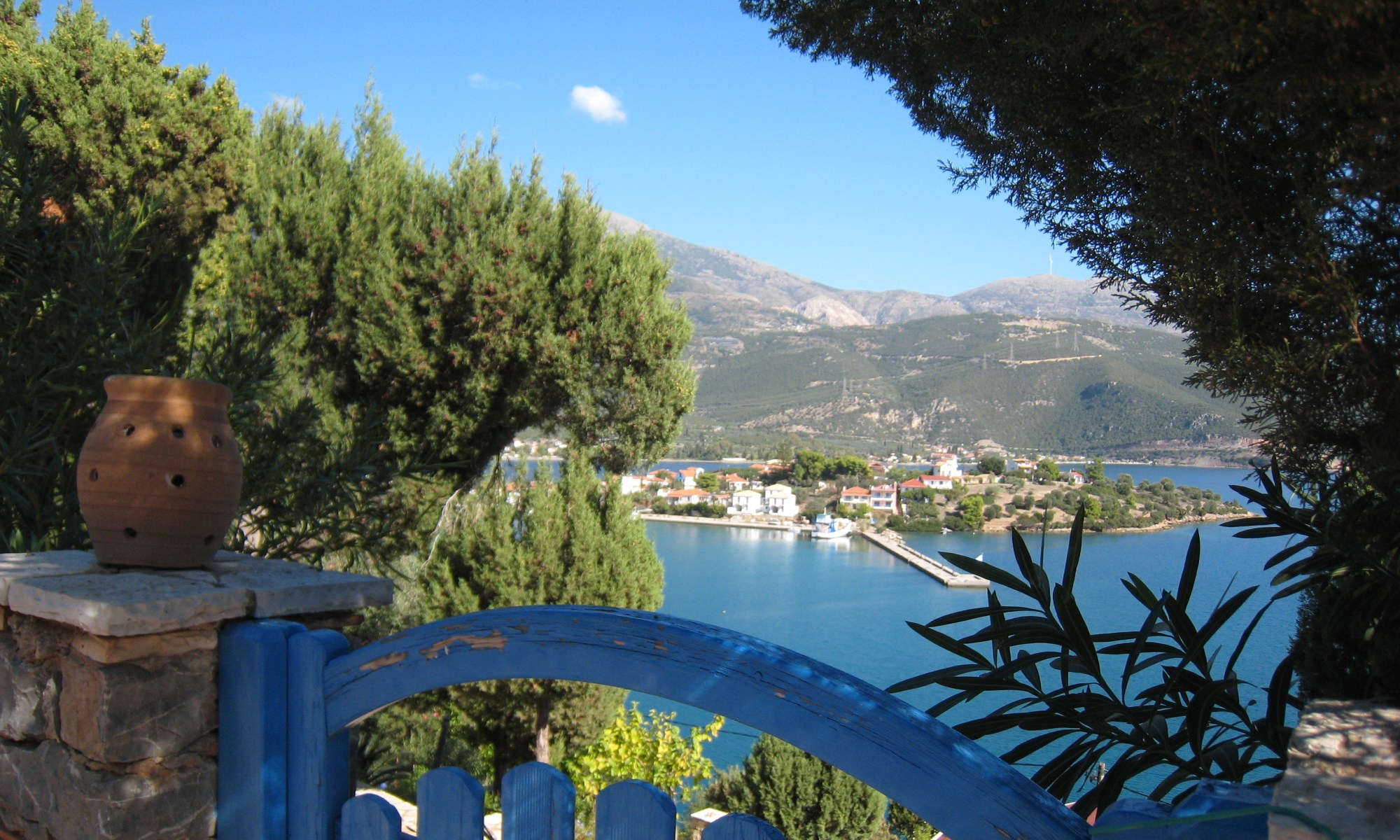
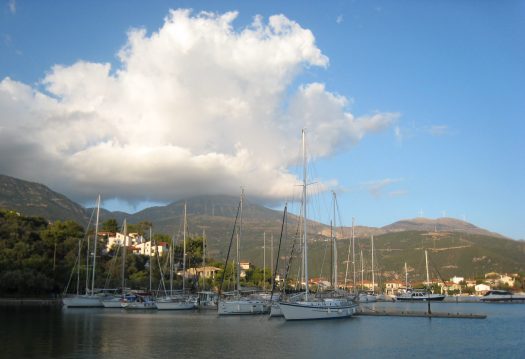
Situated in between the Ionian Sea and the Corinth Canal, Trizonia, since a long time, is a well known stop over for traveling ships. Geographically speaking, the island is part of a small archipelago which includes 3 smaller islands: Agios Ioannis, Planemi and Prasoudi. The name “Trizonia” possibly comes from the homonymous insect “trizoni” or “cricket” in English, even though there are some other explanations. It is the largest and the only inhabited island in the Gulf of Corinth. In winter, the number of permanent residents is less than 50. Needless to say that during summer months this number changes dramatically. There are nearly no cars on the island making this place a haven of peace. To come and go, you have to take a small taxi boat that makes frequent routes to the mainland. There are also no shops, which makes it essential to often go ashore for provisioning. The port itself is one of the most sheltered in the area and, since it is a crossroad, the location used to be a check point. During the Ottoman Empire, the island had a quarantine centre, a custom office and even a small garrison.
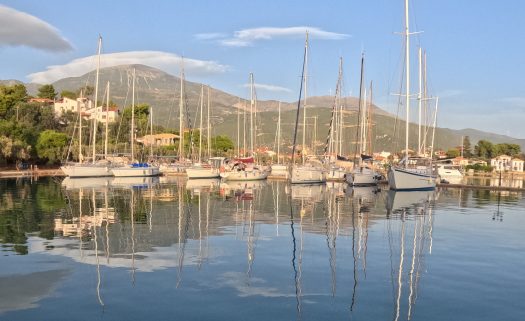
Nowadays, we could describe Trizonia as a very quiet and relaxing place out of the beaten tracks and that was the main reason why we decided to come back. We still had good memories from our previous stay, three years before. That was in October 2020, when the port was managed by the municipality which had made available all the facilities including water, electricity and moorings. Therefore, we were expecting to find a well organized little port. Unfortunately, that was not the case anymore. On our arrival, we had a quick chat with the sailor who took our lines. He informed us that the port has been left unattended and that it was now free of charges. As a result, there was no more access to electricity and most lazy lines were taken by boats moored there for winter. Luckily, there were some spaces left alongside the concrete pontoons.
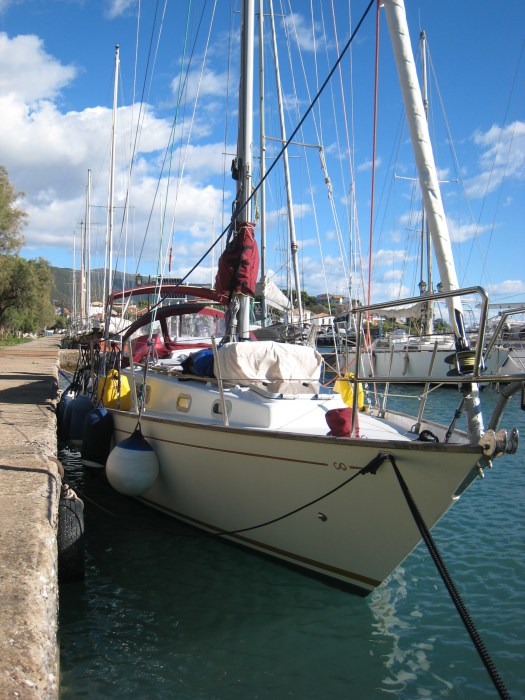
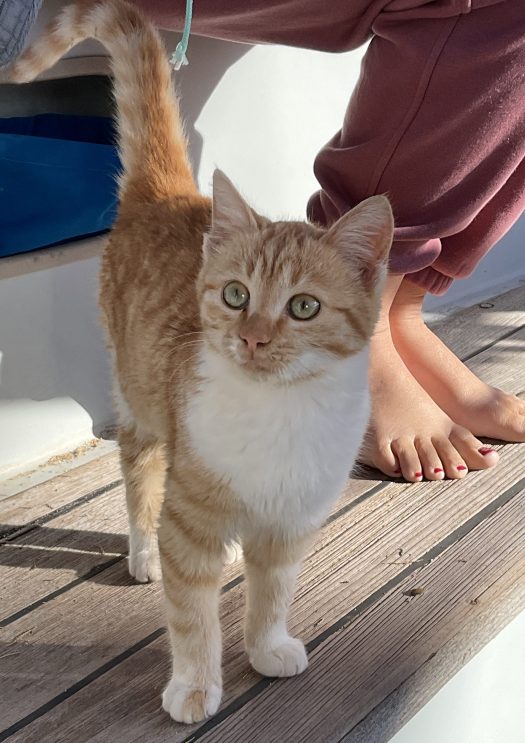
In the village, the restaurant ‘Kalypso’ was exactly as we left it three years ago. And the usual clients were sitting at the exact same places. We were more than happy to recognize some familiar faces. After talking with the locals, we understood that the situation in the port was chaotic and that nobody was anymore in charge of the maintenance and the mooring lines. That said, we didn’t want to stay too long alongside. The main reason was that the port had a colony of innumerable cats who had the bad habit to use the boats as dormitories. Those cute little monsters also loved to scratch their nails on the spray hoods and urinate all over the decks. So yes, we quickly had to move the boat on a mooring line and preferably berth in a way that cats could not reach the deck.
We decided to take things in our own hands and to lay a temporary mooring for the time of our stay. A 14mm three strand rope had to be fixed somewhere in that muddy seabed. With nearly no visibility, finding a steady attachment for the line was not an easy task. But it was worth it ! In case of bad weather, we would feel safer to know exactly on what the boat was attached.
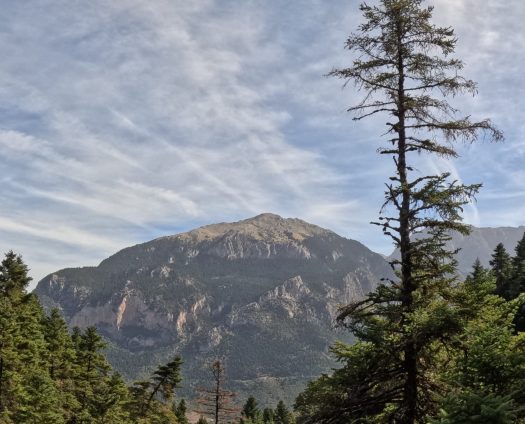
A week after our arrival, we crossed to the mainland and went to Nafpaktos. There, we rented a car with the plan to explore the surroundings. What was lying behind the coastline was the Vardousia and Giona mountains. Those are the most southern extension of the famous Pindus range. This region is often referred to as the “Greek Alps”. An area little inhabited with scattered villages and very bad roads.
After quickly finishing the paperwork, we parked our newly rented car and went for a coffee in the renowned port of Nafpaktos.
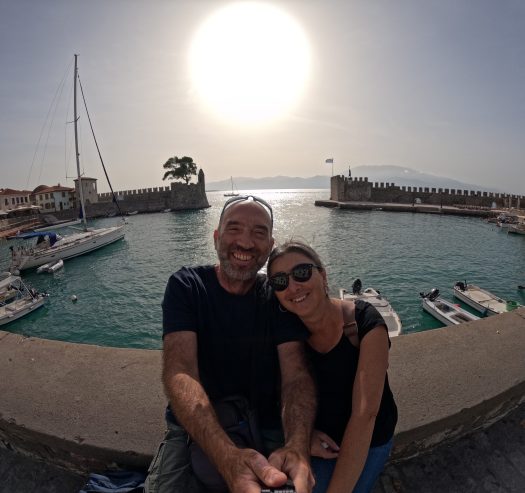
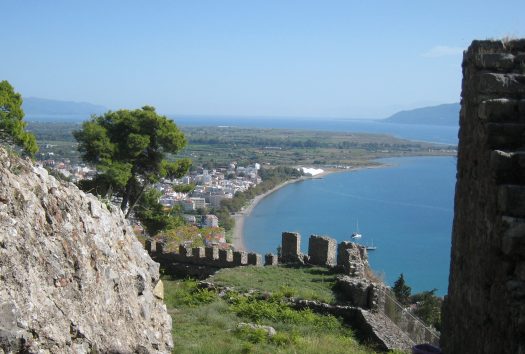
It was passed midday and this October afternoon was still hot. But we didn’t want to miss visiting the fortress which overlooks the town. Despite the heat, we managed to climb at the top. Those fortifications are dating from ancient times but most of the castle was built by the Venetians. The fortress was indeed a strategic stronghold controlling the passage between Peloponnesos, mainland Greece and the Corinth Canal.
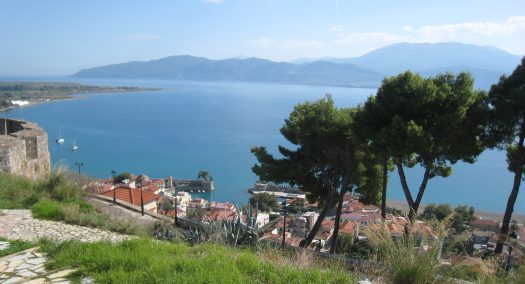
The view from the castle was rewarding, although the inside of the place was a bit of a disappointment. Still, we had to pay some euros just to be allowed to enter the walls.
Next day, we woke up early and left Trizonia with the taxi boat to get back on the mainland and start our exploration of the mountains. At first we went to Elatou, situated at around 1000 m altitude. The village is lying on the slopes of the hill Kerasovouni which is situated on the south side of the Vardousia mountains.
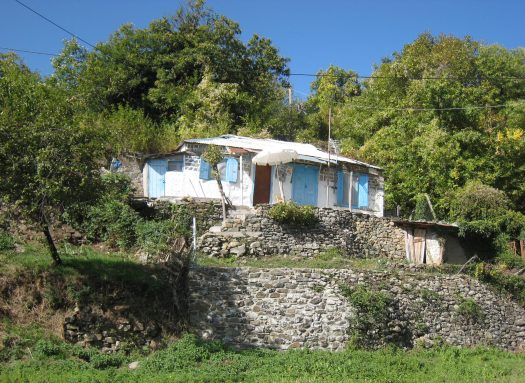
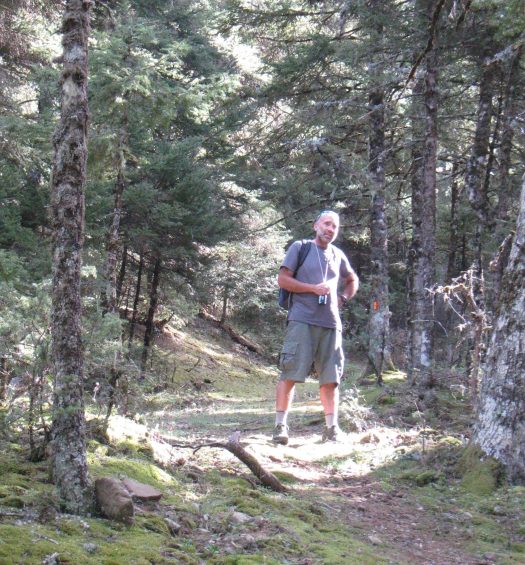
We parked the car at the centre of the village and started hiking on a dirt road that was running across a magnificent pine forest. Apart from the dominant fir trees we could also discern cedars and many chestnut trees.
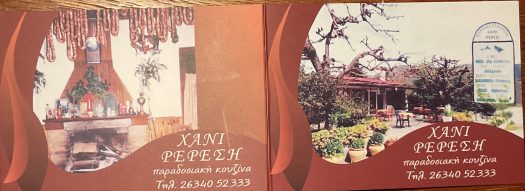
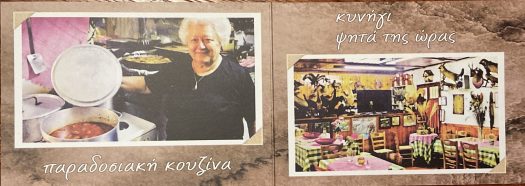
Later that afternoon, we stopped for a meal at Hani Reresi. “Hani” in Greek is a place where, in the old times, travelers used to stop for the night to eat and rest. In other words, a “Hani” was a kind of hostel on the side of the road, often at the foot of a mountain range. Fortunately, in this area, there are still a few “Hania” left. Some of those even provide rooms for the people passing by. We stopped at “Hani Reresi” which is owned, since before the war, by the father of giagia Nitsa. This old lady cooks 365 days a year and people come from very far away to enjoy her food. The place is open all day and serves only local dishes made from local products. We had an extraordinary wild boar stiffado and tried her various handmade traditional pies. But the most incredible thing of all, was the red wine that she served us. A very well kept recipe made out of local grapes: a sweetly refreshing beverage ! Altogether we had one of the best meals in our lives ! Greek cuisine at its finest !
The next day, we left the island early and drove towards the northwest part of the region to reach the artificial lake of Evinos. An empty road drove us under the shadows of high mountains and the depths of low gorges. After 81 km, on perilous roads, we reached the village of Arahova. This village is perched above the lake Evinos, at 960 m altitude on the slopes of mount Kokkinia. This smaller summit also belongs to the Vardousia range and looks down at the artificial lake which is one of the biggest in Greece. It is also the main water supply for Athens. The dam was built between 1992-2001 and the lake was created when the waters of Evinos and some other rivers were lead here. An underground tunnel of 32 km was then constructed to transport the water towards the next dam of Mornos which is closer to Athens.
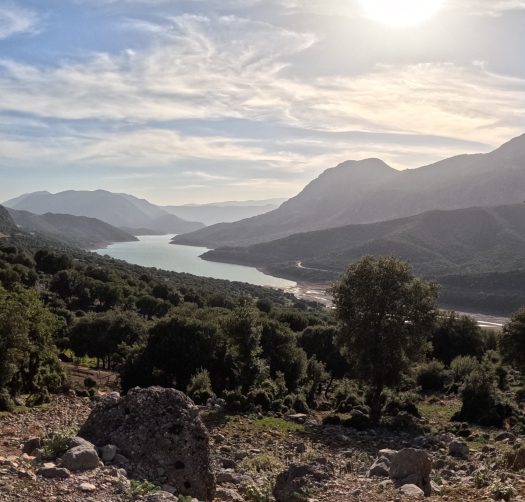
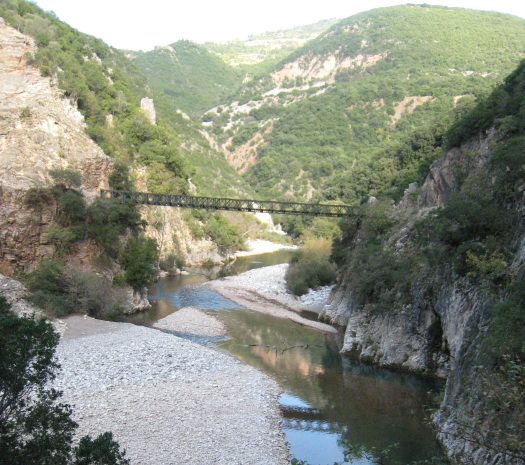
After enjoying those beautiful Alpine panoramas, we decided to return down to the coastline following another road, which was passing close by the lake Trichonida. This body of water is the second largest in Greece, with a surface of 95,8 sq km and a depth of max 58 m. It is considered to be a very important lake with an extremely rich ecosystem and various rare species. Despite intensive agricultural activity in the surrounding area, it is also one of the cleanest lakes in the country. On the way down, the road passed over a bridge which was crossing the river Evinos.
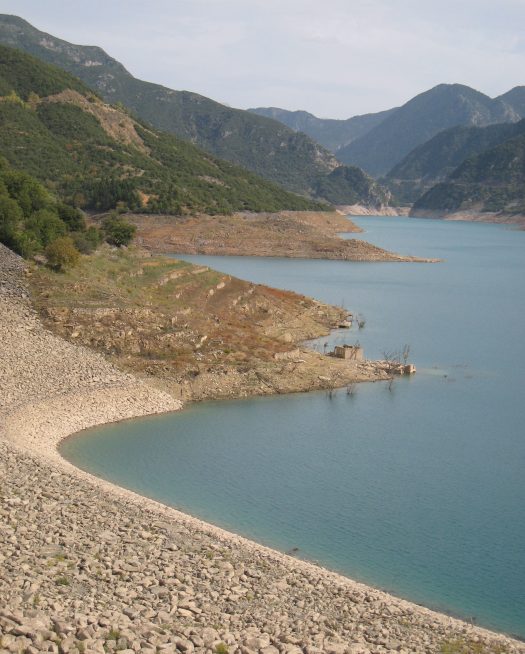
Two days later, we visited the other artificial lake of Mornos. This one was constructed in 1979, also in order to supply water for Athens. To create this huge dam, the village of Kalion Fokidas had to be totally flooded and the residents were moved to another area.
We passed by Lidoriki and went through the village of Sikia. This strange place is located under mount Giona, one of the most famous mountains of Greece with an altitude of 2.510 m. Plaka Sikias is known as the highest cliff of the Balkans, with a height of 1100 m ! “Sikia” comes from the greek word “skia” which means shadow. The little village is actually built on the west side of the mountain, under the shadow of a vertical cliff which is really impressing !
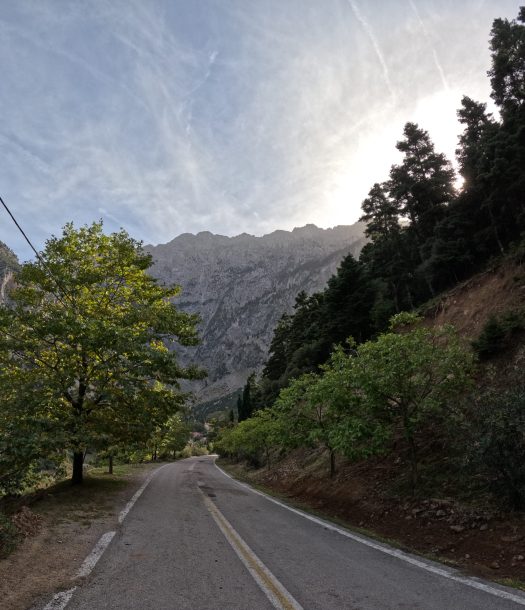
In May of the year 1821, during the Greek Revolution, this mountainous area was the scene where the Greeks defeated the Ottomans. And again, during the German occupation in 1940, it is in the caves of Giona that the Greek Resistant Forces were hiding alongside the British Army.
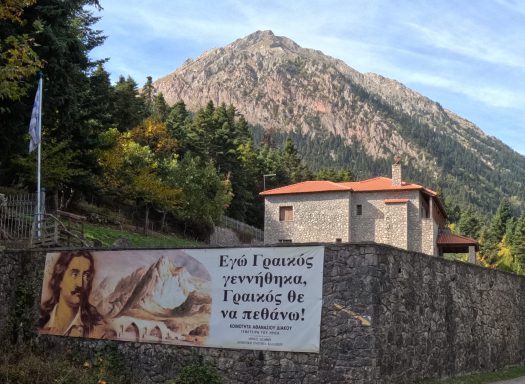
We followed a winding road which took us higher among these two giants. On one side we had the Vardousia Mountains and on the other Giona with its wild slopes. After some kilometers, we finally reached the village of Athanasios Diakos (Ano Mousounitsa). We parked the car and started hiking a path that connects Ano(up) Mousounitsa with Kato(down) Mousounitsa. An amazing trail that was quite short and relatively easy. In total, we walked 3 hours, passing through a small forest full of fir trees and crossing various little streams. A magical place that left us hungry for more mountain treks.
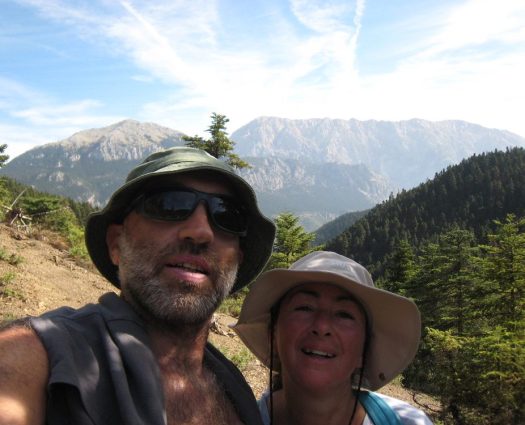
Back in the car, we drove via a different road with only one thought in our heads: the meal at “Hani Reresi”. And yes ! We went back to this sweet granny to eat one more time her fantastic recipes and drink her mythical wine.
The following days we visited Itea, Amphisa and Galaxidi before returning the car. A full week of exploration ended and left us with splendid images and memories.
Days passed by in Trizonia in a very pleasant atmosphere. The island offers calmness, quietness and relaxation. Adding up a bit of swimming and hiking around and you get a perfect place for retreat.
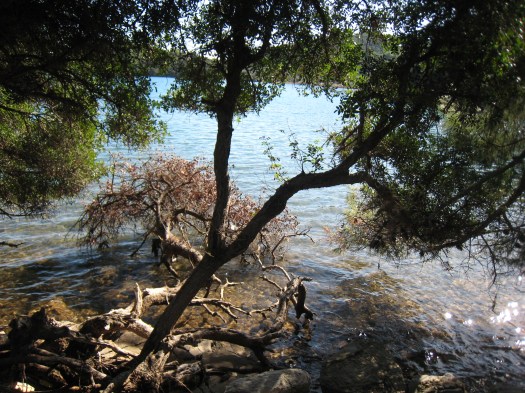
With the laziness, the time passed quickly. Autumn finally arrived and days were getting shorter. Temperatures also began to drop and forecasts were not showing any weather window to let us leave. Meanwhile, it was birthday time for the crew and we celebrated aboard “Samourai” ! The day began with a crystalclear atmosphere that gave the right light for some amazing pictures.
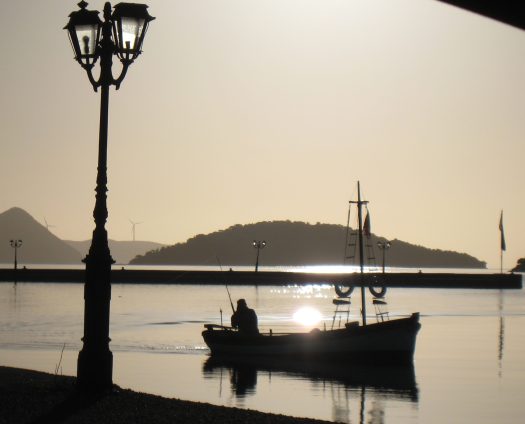
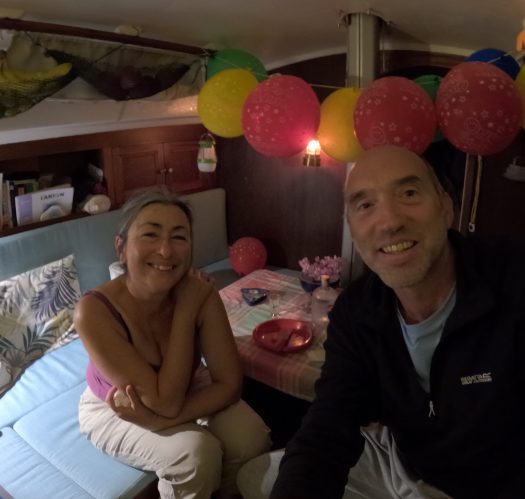
And in the evening, it was Party Time !
Next day, we had planned to go and collect olives on the mainland. We left the island at 7 o’clock in the morning, with the small fishing boat of Theodoros and Nikos.
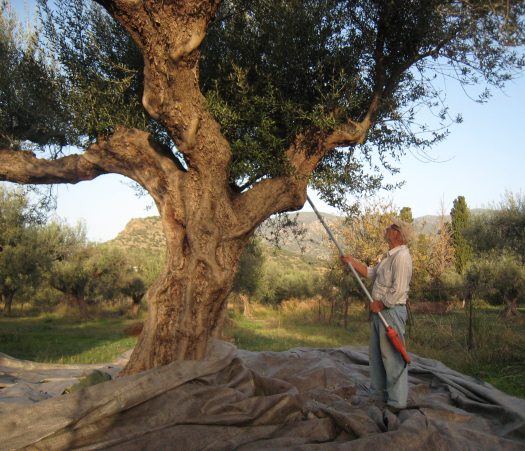
Collecting olives was a fantastic experience and a great lesson in humbleness. One at the age of 86 and the other at the age of 84, the two brothers made us feel ashamed of ourselves. Few hours after beginning to work we were already tired, but one look at those men made us keep going.
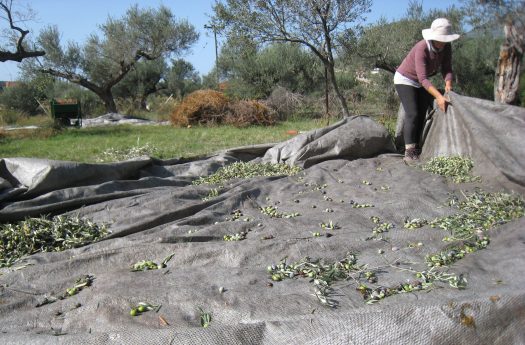
In general, this year was a bad one for olives. The production of the trees was low, unlike previous years. We managed to collect the olives of 70 trees just the four of us, in only two days. Needless to say that for the following days our bodies were aching all over.
It was by now the middle of November and the chances of getting a fair weather window were looking very slim. At this time of the year, south westerlies are prevailing in the Ionian Sea. Those winds are bringing with them bad visibility, rain and big swell from the south. The weather was certainly not in our favor. Nevertheless, we were still in Trizonia where only the wind can be a bit annoying. The rain is rarely reaching the island because of mountain protection.
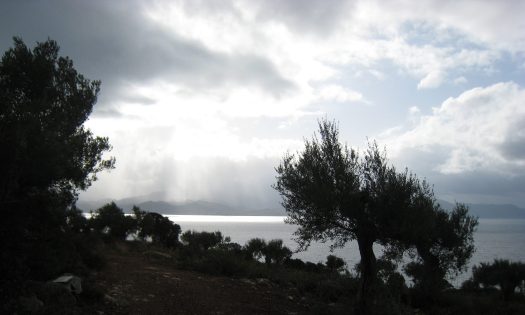
Between us we called it: ‘‘The Bubble Island’’, because even though all around we had extreme weather conditions, the island wasn’t affected. Our observations were also confirmed by the locals. They all said the same thing: “Here, we never have problems with bad weather.”
It didn’t seem obvious to leave the island and sail west. We would be against the currents and against the prevailing westerlies which were funneling into the Gulf of Corinth. But we knew that very well much before entering this area: autumn wasn’t the best time. The lows were passing one after the other and above all, those winds would also bring strong surface currents under the bridge of Rio-Antirio, making it even more difficult to pass.
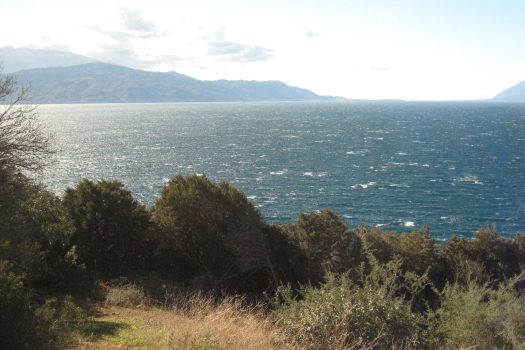
What we were waiting for was a nice North-easterly breeze to push us back into the Ionian Sea. We needed at least two days of fair wind to reach Lefkada. Gradually, after each front, we started noticing that the wind was turning to the North and even a bit to the East. Those conditions seemed ideal to exit the Gulf of Corinth. We also realized that in the early mornings, there was often a land breeze: a thermic wind blowing from the mountains that we had just explored. Apparently, with the sun rising, those high summits were sending cold air down the slopes.
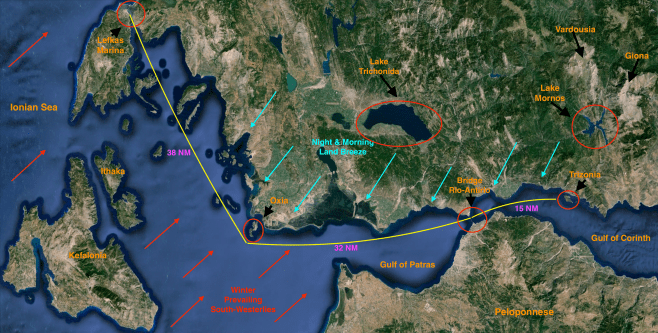
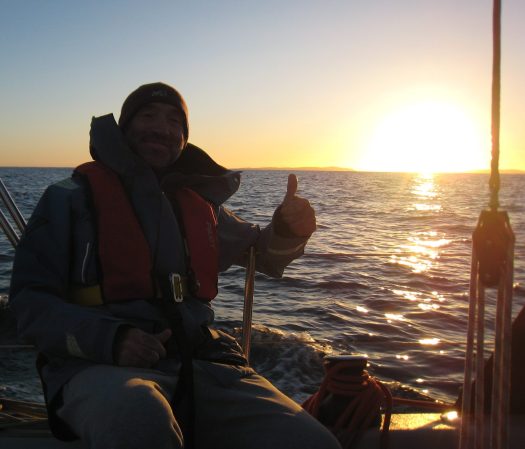
Meanwhile, aboard Samourai, everything was getting ready in order to be able to leave at any time. And one early Sunday morning, after a bad rainy night, we woke up and discovered a nice clear sky. We checked the conditions at the bridge of Rio-Antirio via the local web-cam and noticed that the sea conditions had also settled down. The sky was clear, the sea was calm and a light breeze was blowing from the North-East. We looked at each other, checked the clock and had the same feeling: we had to go there and then. That was our chance to exit the Gulf of Corinth. An hour later, we casted off and headed west towards the Ionian Sea. We finally had those perfect High Pressure winter conditions : good visibility, bright sun, cold air and no one around.
We hoisted the mainsail and said goodby to Trizonia, hoping that one day, we would return again.